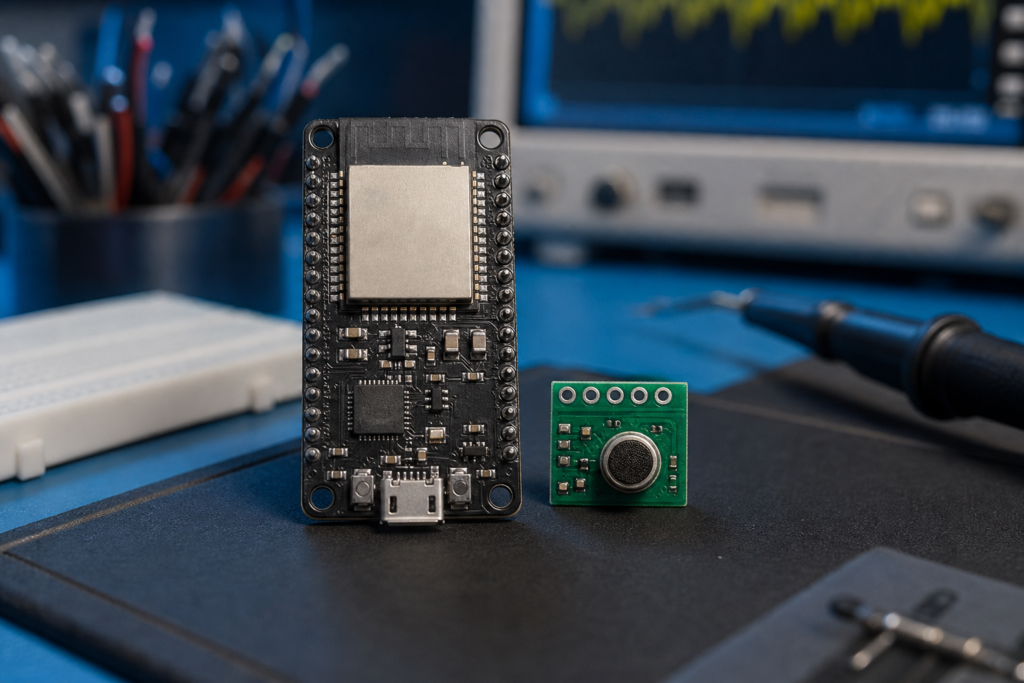
INMP441 for ESP32 Voice Projects: Why This Mic Module Is Selling Fast
Some parts get popular because they are technically perfect. Others get popular because they solve a real project problem quickly enough to keep engineers moving. INMP441 belongs in the second group. It keeps showing up in ESP32 voice boards, smart speakers, AI hobby kits, and low-cost voice interfaces because it is easy to buy, easy to connect, and usually good enough to get meaningful audio into the system without a long analog design cycle.
Recent transaction signals on major Chinese component marketplaces make that trend hard to ignore. INMP441 modules are moving in volume, and that usually means one thing: teams are not just testing them, they are putting them into real voice builds and repeat orders.
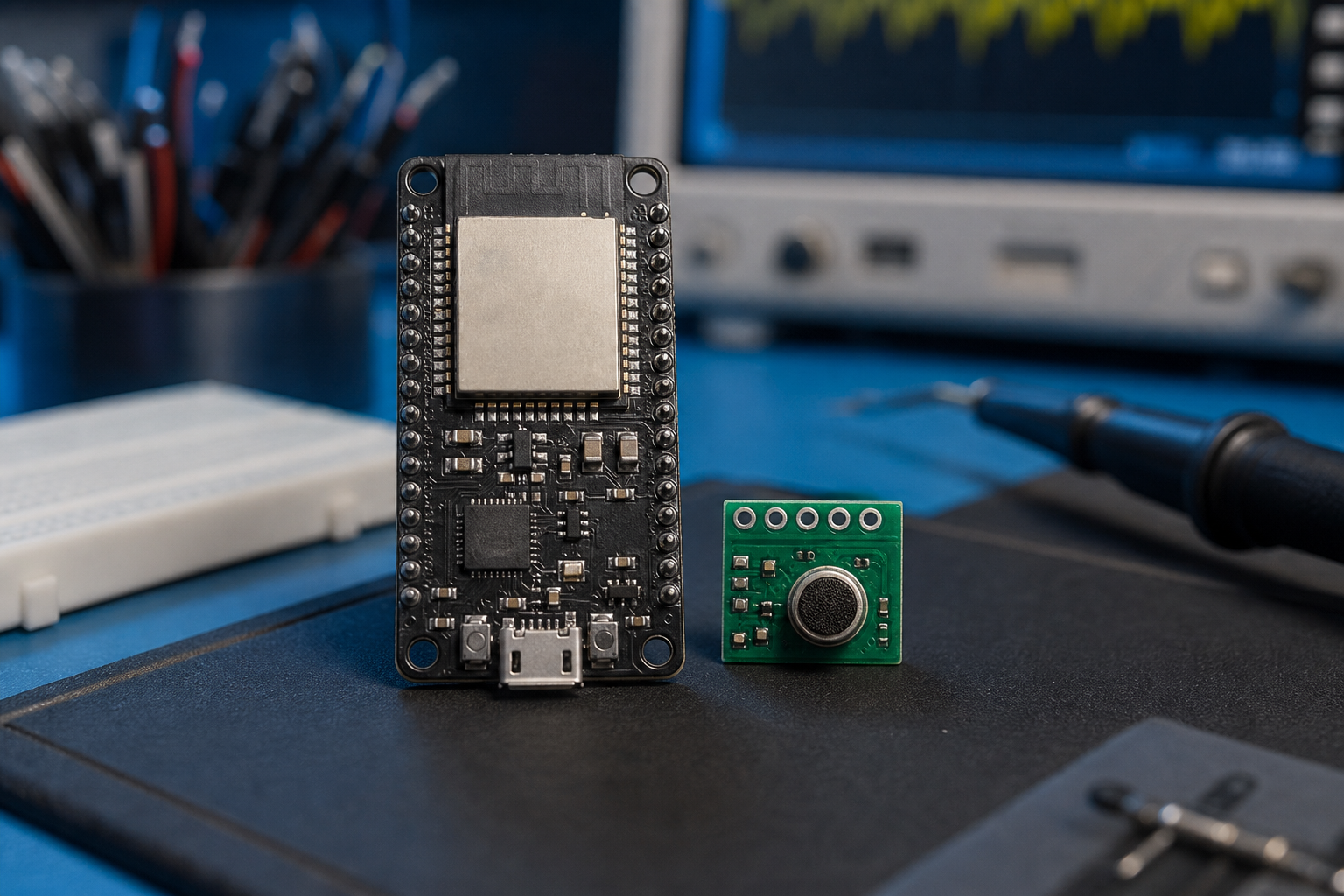
What Kind of Part Is INMP441?
INMP441 is a digital MEMS microphone solution commonly sold as a small breakout module for I2S audio capture. In practical ESP32 work, it is often chosen for voice wake-up experiments, simple speech capture, intercom prototypes, audio logging, robot voice input, smart panels, and compact human-machine interfaces that need microphone input without a more complex analog front end.
The reason engineers like it is straightforward. Instead of fighting analog microphone routing, biasing, and gain stages at the first prototype stage, they can move faster with a digital microphone module that connects into the MCU’s audio interface path more directly.
Why It Is Hot Right Now
INMP441 is benefitting from the same wave that is pushing ESP32-S3 and voice-oriented development boards higher in demand. Once low-cost projects start adding voice commands, chat interfaces, or audio-triggered interaction, the microphone choice becomes one of the first practical decisions. INMP441 modules are inexpensive, easy to source, and familiar enough that many developers reach for them early.
That also explains why the sales pattern is stronger than a one-week novelty bump. This is not only a trend around one board launch. It is part of a broader voice-interface build cycle.
Main Characteristics That Matter in Real Projects
For many small voice products, the attraction is not lab-grade audio. It is integration speed. INMP441 modules are compact, cheap, and widely supported in community examples. They suit products where speech detection, basic command capture, or environmental audio sampling matters more than premium microphone-array performance.
They also pair naturally with ESP32-class hardware, which is why they appear so often in the same search and sales patterns. If a project is already centered on low-cost Wi-Fi or Bluetooth control with a small amount of voice functionality, this module feels like a low-friction next step.
Problem: The Wiring Looks Simple, but the Audio Stream Is Wrong
This is one of the most common first failures. The board powers up, the firmware compiles, and the I2S pins seem correct, but the captured samples are noisy, clipped, empty, or shifted. In many cases, the issue is not the microphone itself. It is pin mapping, clock configuration, left-right channel selection, or a mismatch between the module and firmware expectations.
Solution
Treat the first bring-up like an interface validation step, not a full application test. Check supply voltage, confirm the exact I2S pin assignment, verify whether the module is configured for left or right channel output, and start with a minimal audio capture example before adding voice algorithms. If the raw sample pattern already looks wrong, do not debug wake-word logic yet. Fix the transport layer first.
Problem: The Module Works on the Bench, Then Sounds Bad in the Product
Microphones are easy to underestimate mechanically. A module that sounds acceptable in free air may become weak, hollow, or noisy once it is boxed into a plastic enclosure, placed near a speaker, or mounted next to switching power circuits and Wi-Fi activity.
Solution
Design the acoustic path deliberately. Give the microphone a clear opening, keep it away from turbulent air paths and noisy power sections, and test audio inside the final enclosure early. If the product includes a speaker, check echo and vibration behavior before the mechanical design is frozen. A clean bench recording is not proof of a clean field recording.
Problem: Power Noise Leaks into the Audio
Low-cost voice projects often combine wireless transmission, displays, LED activity, USB power, and digital audio on a compact board. That is a good recipe for noisy rails and poor grounding. The result can be hiss, random spikes, or unstable capture quality that looks like a software bug but is really a hardware one.
Solution
Keep the microphone supply and grounding path tidy. Place decoupling close to the module, separate high-current switching activity from the audio area where possible, and test under worst-case conditions such as Wi-Fi transmit plus screen refresh plus USB power. If the audio quality drops only under system load, the microphone may be innocent.
Problem: Teams Expect Voice AI Results from a Single Cheap Mic
INMP441 is useful, but it is still a low-cost single-microphone module. Some teams jump from “we can capture voice” to “we can do robust far-field conversational audio in a noisy room” without changing the hardware architecture. That gap creates disappointment later.
Solution
Match the part to the product ambition. INMP441 is a practical fit for near-field voice input, simple command capture, and fast prototyping. If the requirement moves toward far-field pickup, beamforming, aggressive noise suppression, or premium audio interaction, plan for a stronger microphone architecture instead of forcing a cheap module to carry the whole system.
Problem: Procurement Treats All INMP441 Modules as Equivalent
Marketplace listings often make modules look interchangeable. In reality, module layout, solder quality, pin labeling, onboard regulator choices, and vendor consistency can vary enough to create small but annoying differences during production.
Solution
Approve specific module variants rather than the keyword alone. Keep notes on pin order, operating voltage expectations, physical size, microphone orientation, and supplier consistency. If a design is heading toward production, buy from more than one source early and compare behavior before locking the BOM.
Selection Notes
INMP441 makes the most sense when the goal is practical digital voice input at low cost, especially in ESP32-class products that need a straightforward development path. It is a strong candidate for smart control panels, voice-enabled gadgets, test fixtures, educational kits, simple audio triggers, and early-stage interactive products.
It makes less sense when the project needs premium far-field performance, multi-microphone processing, or highly controlled industrial audio capture. In those cases, the module can still help during prototyping, but it should not define the production architecture by default.
Final Take
INMP441 is selling fast for a reason. It sits in the middle of a very active design space: affordable voice-enabled hardware. That makes it more than a random accessory. It is a useful signal that low-cost speech and audio features are moving deeper into everyday ESP32-style products.
If you are choosing microphone modules for an ESP32 voice design and want help comparing module options, supply stability, or bring-up risk, send the target board and use case through our contact page. We can help review both the engineering fit and the sourcing side.
FAQ
Is INMP441 a good default microphone for ESP32 voice projects?
For many near-field voice projects, yes. It is practical, easy to source, and widely used for quick I2S microphone bring-up.
Why does the audio sound worse after the enclosure is added?
Acoustic openings, internal vibration, nearby speakers, and power noise often change the result dramatically. Enclosure testing matters as much as firmware setup.
Can one INMP441 module handle advanced far-field voice AI well?
Usually not. It works well for simpler or near-field tasks, but more demanding voice products often need a stronger microphone architecture.