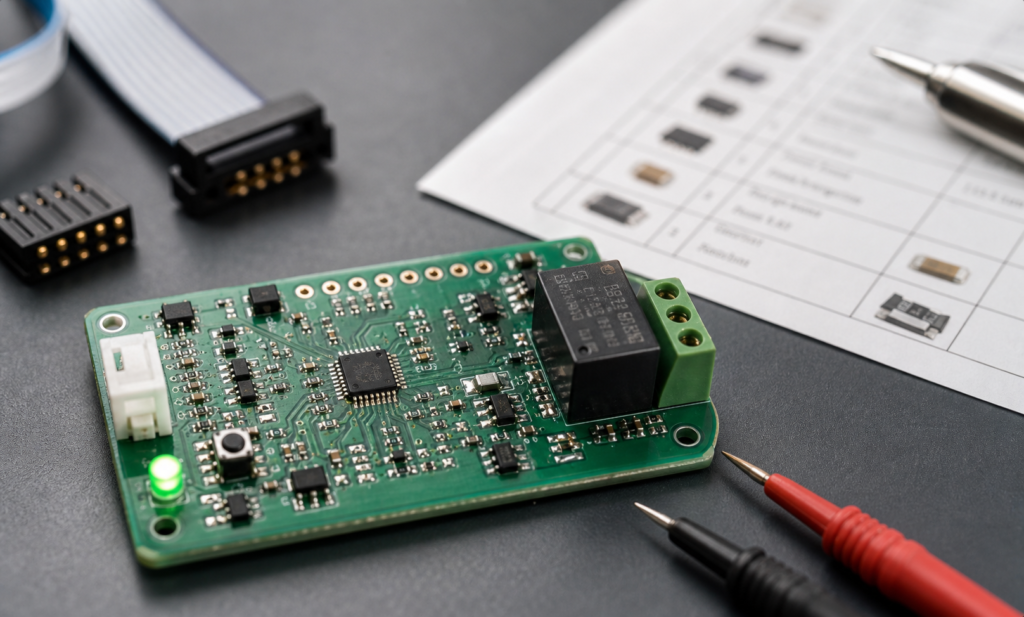
CH32V003 in Ultra-Low-Cost Designs: Useful MCU or False Economy?
CH32V003 gets attention because it pushes 32-bit MCU pricing into territory that used to belong to very small 8-bit parts. That makes it tempting for simple, high-volume boards.
A more useful way to look at it is not whether CH32V003 looks attractive in a short comparison table. It is whether the part fits the product, the firmware team, the supply plan, and the field conditions.
Chip Type and Typical Applications
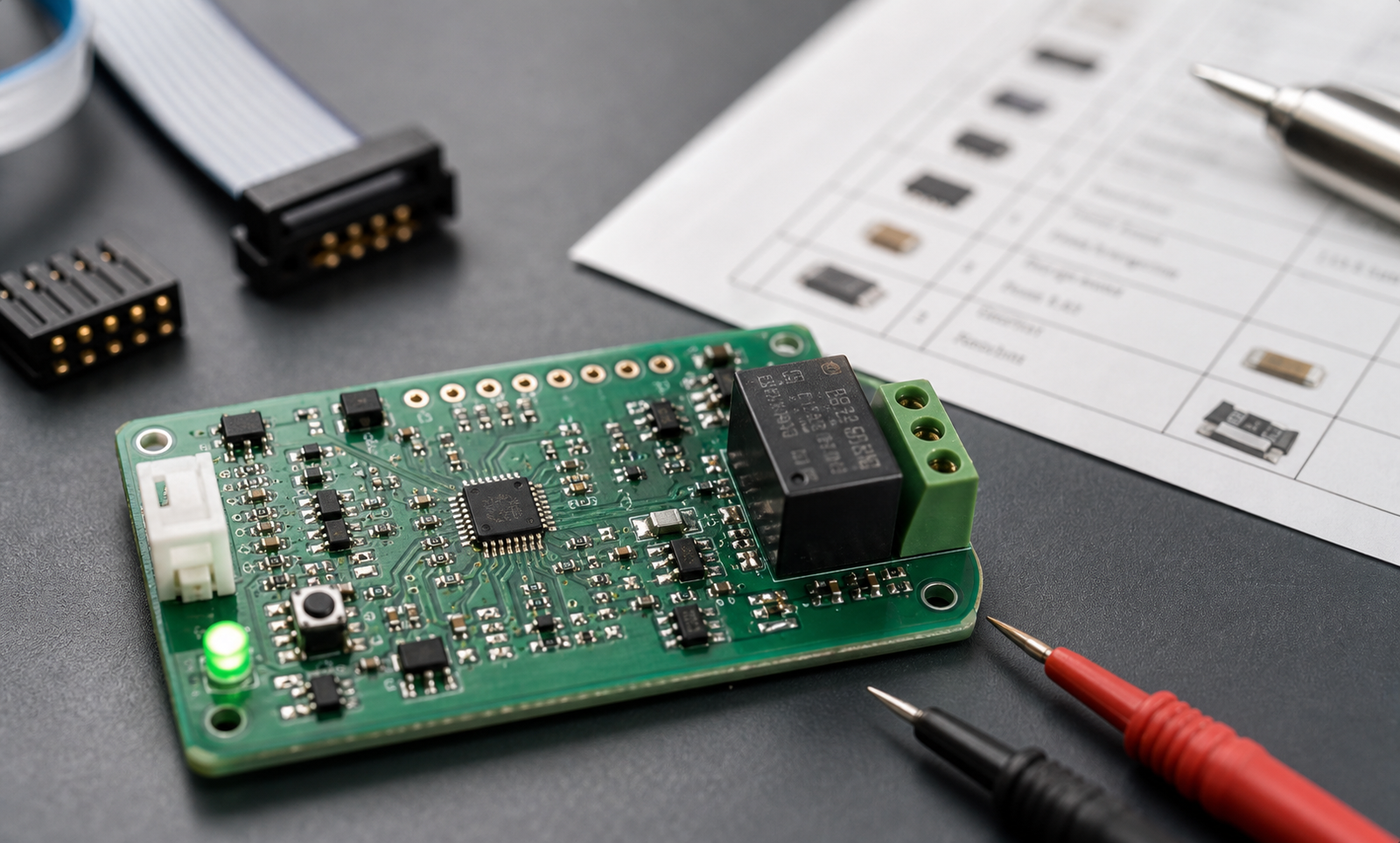
CH32V003 is a low-cost 32-bit RISC-V general-purpose microcontroller. It can fit simple sensor boards, small user interfaces, LED control, relay control, low-cost adapters, simple consumer accessories, and basic industrial accessories.
Why This Part Is Being Discussed
The appeal is low cost, RISC-V architecture, small packages, and enough peripheral coverage for simple control jobs.
Problem: The bill of materials looks good but engineering time rises
Low part cost can be offset by toolchain learning, debug setup, and smaller ecosystem depth.
Solution
Price the full development path, including debugger, firmware bring-up, test fixtures, and engineer familiarity.
Problem: Memory limits are underestimated
Small Flash and SRAM can become tight once communication, calibration, and diagnostics are added.
Solution
Compile a realistic production firmware early and leave margin for field updates or customer-specific changes.
Problem: Debug access is not planned into the board
Tiny boards often remove debug convenience to save space, then become difficult to support.
Solution
Keep accessible programming and debug pads at least through pilot production.
Engineering and Procurement Checklist
Before selecting CH32V003, check Flash and SRAM margin with a near-production firmware build, not only a demo. Confirm debugger availability, programming fixture access, package handling, GPIO current limits, oscillator needs, and production test time. For procurement, the part cost should be reviewed together with toolchain readiness and engineering support, because a very low unit price can lose its advantage if bring-up becomes slow.
When It Fits Best
It works best in focused control boards with stable firmware scope. If the product may grow into heavier communication, diagnostics, or field-update needs, choose more memory earlier rather than forcing the smallest MCU to stretch.
Practical Takeaway
CH32V003 can be a smart choice for very focused designs. The savings are real only when firmware scope, debug access, and production support stay under control.
If you are comparing CH32V003 with other options, or checking whether it fits a real project, send the part numbers and application notes through our contact page. We can look at the design and sourcing tradeoffs together.
FAQ
Is CH32V003 a safe choice for every design?
No. It can be a strong option, but only when the electrical, firmware, supply, and production requirements match the part.
What should be checked before approving it?
Check package, operating conditions, memory margin, peripheral needs, layout requirements, firmware support, lifecycle, and sourcing availability.
Can it be used as a quick replacement?
Sometimes, but it should not be assumed. Validate pinout, firmware behavior, electrical limits, and production programming before treating it as an approved replacement.