ESP32-C5 Selection Notes: Where Dual-Band Wireless Really Helps
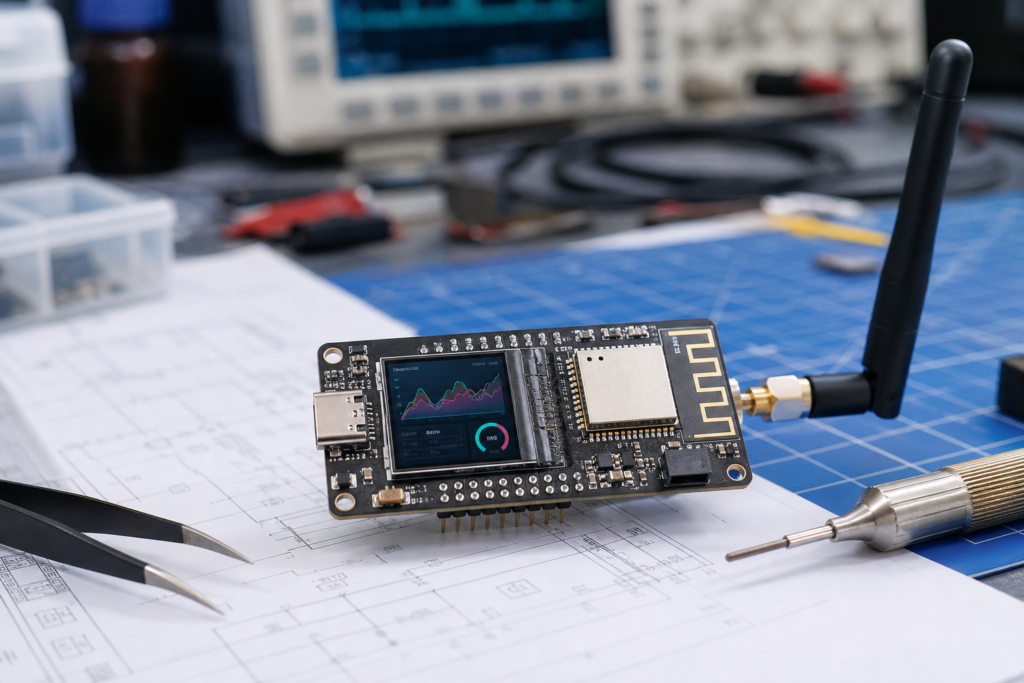
ESP32-C5 has started showing up more often in current dev boards and product discussions because it closes a gap that many IoT teams have been working around for a while. Plenty of products still live happily on 2.4 GHz Wi-Fi, but crowded deployments, HMI-heavy nodes, and multi-protocol roadmaps make dual-band support more attractive than it used to be.
That does not mean ESP32-C5 is the automatic answer for every connected device. It means engineers now have a more realistic option when they want Wi-Fi 6, Bluetooth LE, and 802.15.4 planning in one part without jumping straight into a much larger system design.
What Kind of Chip Is ESP32-C5?
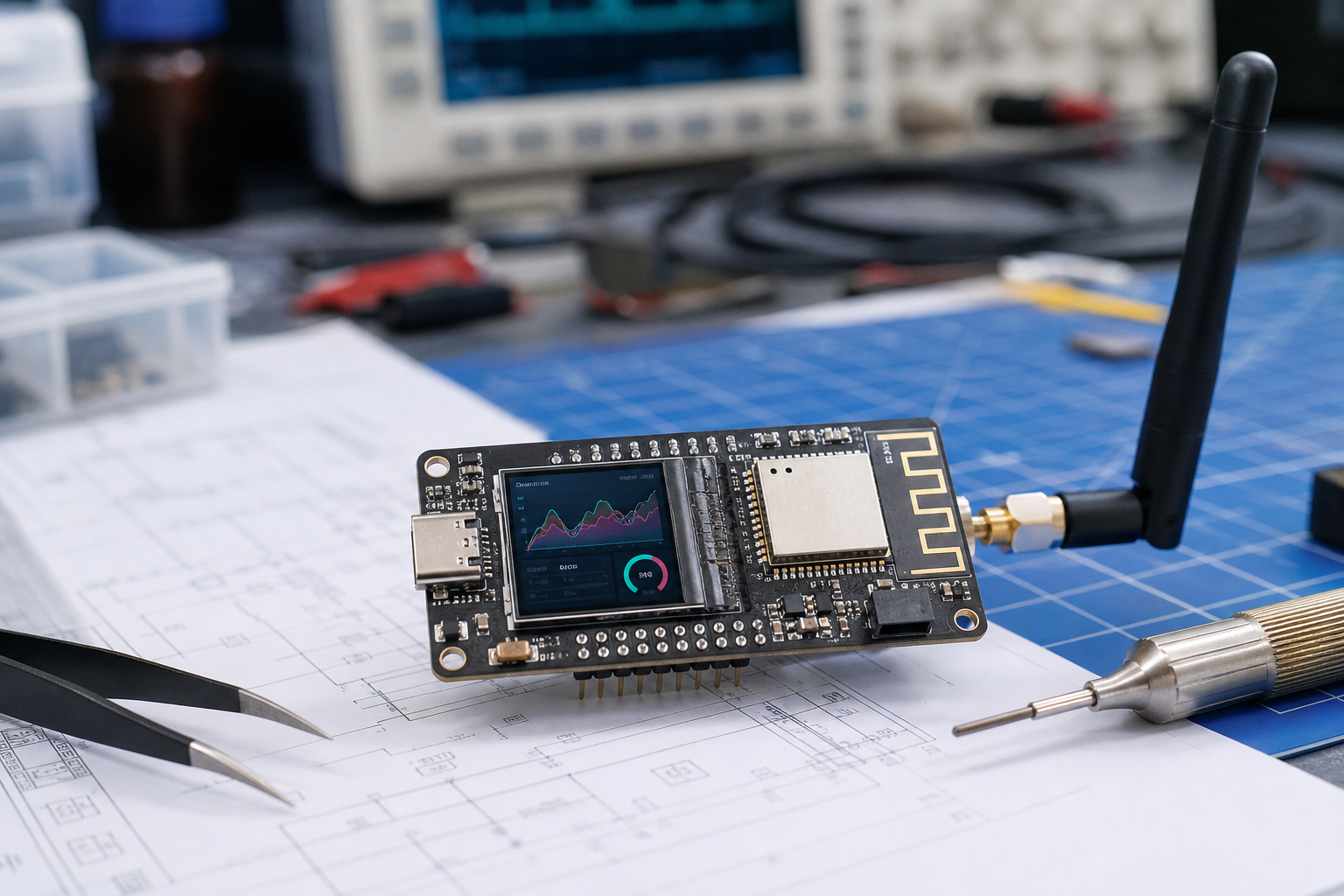
ESP32-C5 is a wireless MCU and SoC built around a 32-bit single-core RISC-V CPU. In practical terms, it sits in the space where connected products need local control, moderate UI or data-handling work, and a flexible wireless stack.
Typical use cases include smart home panels, energy monitors, compact gateways, industrial sensor nodes, handheld configuration tools, connected displays, and any design that may start with Wi-Fi and later need Thread or Zigbee support in the same product family.
Why It Feels Hot Right Now
Recent July 2026 board launches have pushed ESP32-C5 back into view because vendors are finally shipping more visible hardware around it. That matters because engineers often notice a chip only after it starts appearing in real modules, display boards, and compact reference-style platforms rather than in spec sheets alone.
The appeal is easy to understand. ESP32-C5 combines dual-band Wi-Fi 6, Bluetooth LE, and 802.15.4 support, so one design conversation can cover direct Wi-Fi products, smart-home edge devices, and mixed-protocol expansion without changing MCU families immediately.
Main Characteristics That Matter in Practice
The part is strongest when wireless flexibility matters more than raw application processing. It gives teams a cleaner path for products that may need 2.4 GHz compatibility today and less congested 5 GHz operation in the next revision. It also helps when the roadmap includes Thread or Zigbee, because that discussion can happen early instead of becoming a board-spin surprise later.
Another useful point is ecosystem momentum. ESP32 parts are familiar to a wide range of firmware teams, which lowers bring-up friction. That does not remove hardware risk, but it often shortens the path from concept to a useful prototype.
Problem: The Team Picks ESP32-C5 Only Because It Is Newer
This happens often when a newer wireless part looks like a free upgrade. If the product only needs simple 2.4 GHz Wi-Fi and Bluetooth LE, dual-band support may not bring enough value to justify extra design review, antenna decisions, and firmware validation effort.
Solution
Start with the actual deployment environment. If the product will live in apartment buildings, office clusters, industrial cabinets with many nearby networks, or UI-heavy wireless endpoints, ESP32-C5 deserves a hard look. If the product is a simple low-cost node with stable 2.4 GHz behavior, a simpler device may still be the better fit.
Problem: RF Layout Is Treated Like a Footnote
Dual-band support gives more flexibility, but it also makes casual RF decisions more expensive. A board that works on the bench can still underperform once the enclosure, battery, screen cable, or nearby metal parts change the antenna environment.
Solution
Choose the antenna strategy before the mechanical layout is frozen. Keep the RF section clear, protect the antenna keepout, and validate performance inside the real enclosure instead of trusting open-bench results. If the project schedule is tight, a proven module path may save more time than a chip-level layout that needs repeated tuning.
Problem: Memory Margin Looks Fine Until Features Accumulate
Wireless projects tend to grow in quiet ways. OTA partitions, certificates, provisioning flows, logging, graphics assets, protocol libraries, and field diagnostics can consume memory much faster than the first prototype suggests.
Solution
Budget for the production firmware, not the demo build. Review flash and RAM needs with OTA, security assets, manufacturing test hooks, and future feature creep included. If the product uses a display or more complex connectivity stack, leave real margin instead of assuming later optimization will rescue the design.
Problem: Procurement Focuses on One Board Demo Instead of the Real Supply Plan
It is easy to get comfortable after a development board works well. The trouble starts when the production design needs the actual chip, a specific module version, or a package option with different flash and antenna assumptions.
Solution
Separate evaluation hardware from production sourcing early. Confirm the exact chip or module variant, flash configuration, package, antenna type, and certification path before the schematic is treated as stable. Purchasing and engineering should review the same approved part list rather than assume the demo board equals the final BOM.
Selection Notes
ESP32-C5 makes the most sense when wireless capability is part of the product strategy, not just a line in the marketing sheet. It is especially useful for designs that want one family discussion for Wi-Fi, Bluetooth LE, and 802.15.4-related planning.
It makes less sense when the project is extremely cost-driven, the firmware is simple, and the wireless environment is predictable enough that dual-band support will never be used. In those cases, carrying extra platform complexity can be unnecessary.
Final Take
ESP32-C5 is getting attention for a practical reason: it solves a real design conversation around dual-band Wi-Fi 6 and multi-protocol flexibility in compact IoT hardware. That is a stronger reason than hype, but it still needs disciplined RF, memory, and sourcing review.
If you are comparing ESP32-C5 against other wireless MCU options for a current design, send the target application and part list through our contact page. We can help review the tradeoffs from both the engineering and supply side.
FAQ
Is ESP32-C5 mainly for smart home products?
Smart home is a strong fit, but it is not the only one. It also suits connected displays, energy devices, industrial nodes, handheld tools, and compact gateways where wireless flexibility matters.
Does dual-band Wi-Fi automatically improve every product?
No. It helps when congestion, deployment density, or product roadmap requirements justify it. For a simple 2.4 GHz device, the benefit may be limited.
What is the most common early design mistake with ESP32-C5?
Teams often underestimate RF and memory planning. Antenna behavior, enclosure effects, OTA storage, and protocol stack growth need review before the layout is locked.