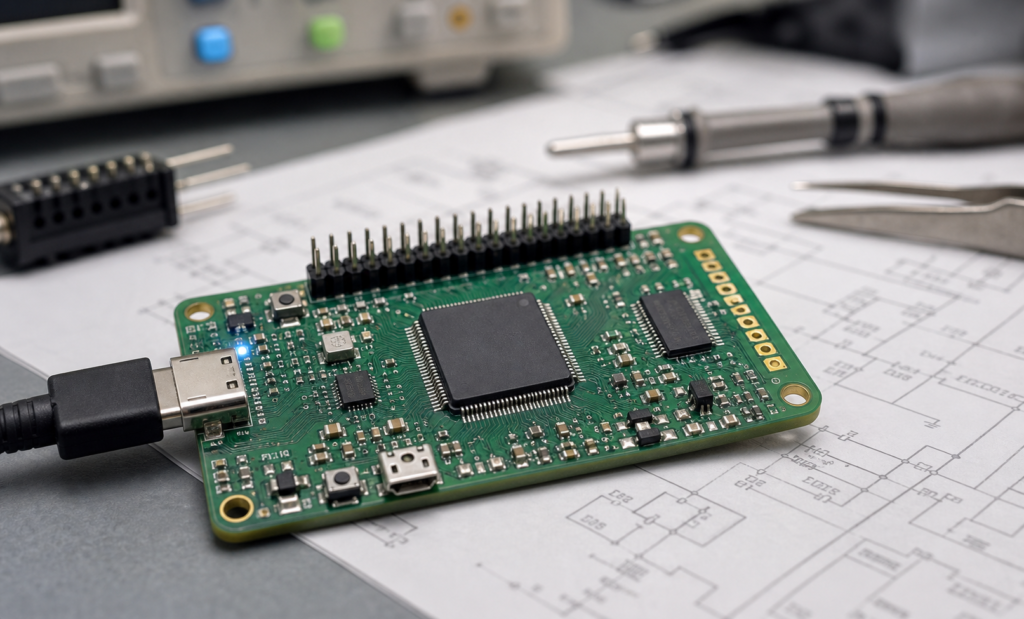
RP2350 for Custom Boards: Where the New Raspberry Pi MCU Fits
RP2350 has pulled a lot of attention because it gives designers a familiar development path with more headroom than the earlier RP2040 generation.
A more useful way to look at it is not whether RP2350 looks attractive in a short comparison table. It is whether the part fits the product, the firmware team, the supply plan, and the field conditions.
Chip Type and Typical Applications
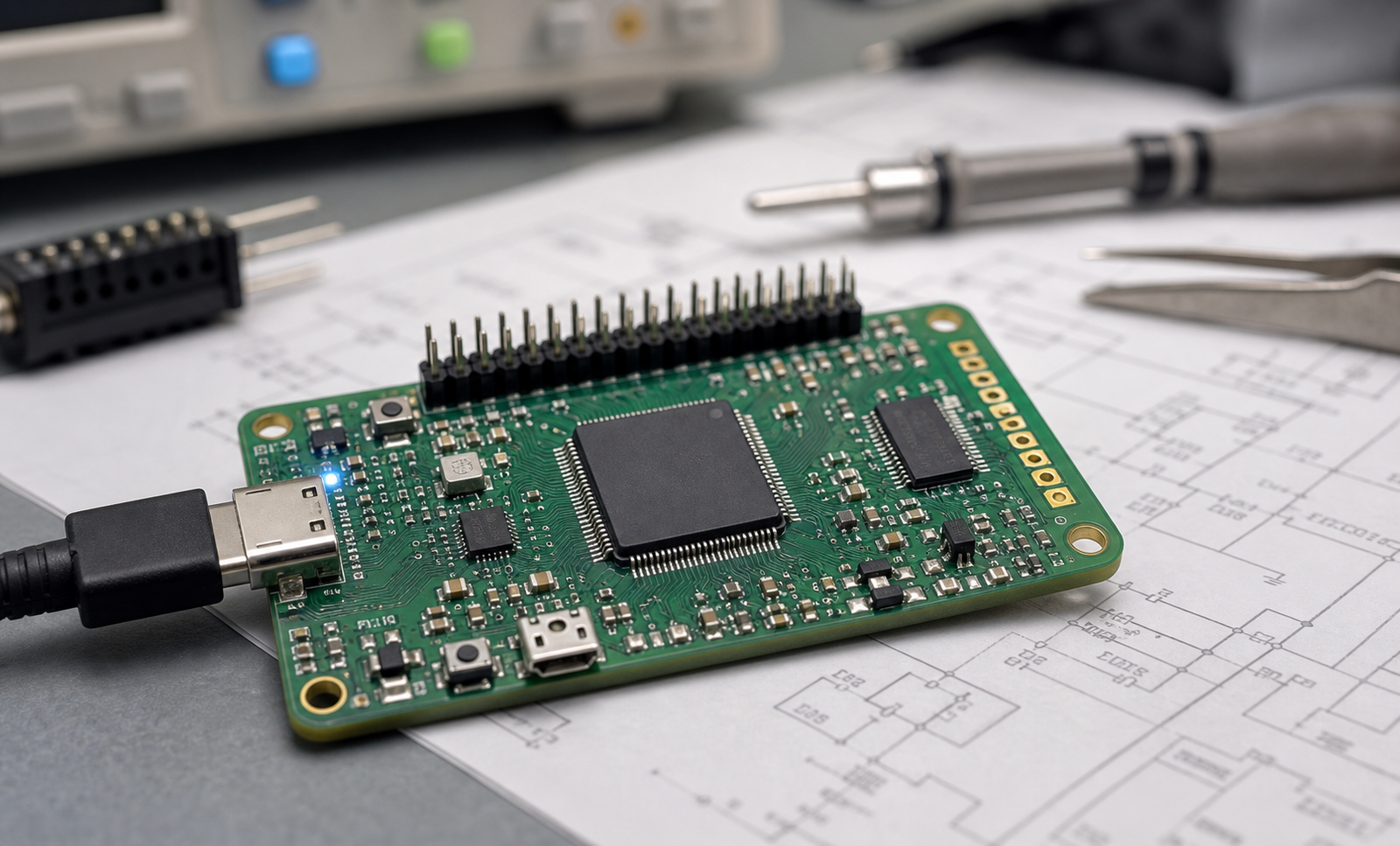
RP2350 is a dual-core microcontroller with Arm Cortex-M33 and RISC-V options. It is worth considering for education hardware, control panels, USB devices, low-cost edge controllers, small HMI accessories, and custom boards that benefit from the Raspberry Pi ecosystem.
Why This Part Is Being Discussed
Its appeal is the combination of developer familiarity, flexible I/O, dual-core architecture, security improvements, and strong documentation. The risk is assuming that a module-style prototype automatically translates into production hardware.
Problem: Prototype success hides custom-board risk
A board can work perfectly as a Pico-based prototype but fail when power, flash, USB, and reset circuits are redesigned.
Solution
Use the official hardware guidance as a checklist and validate power sequencing, boot flash, USB routing, and debug access early.
Problem: Analog measurements are treated casually
Low-cost MCU designs often run into ADC noise, reference stability, and layout sensitivity.
Solution
Separate noisy power paths, check reference behavior, average carefully in firmware, and test the ADC with the real sensor source impedance.
Problem: Supply planning starts too late
Designers may pick the chip after building around a development board without confirming package and sourcing options.
Solution
Decide whether the product will use a module, board, or bare chip before the PCB plan is frozen.
Engineering and Procurement Checklist
Before using RP2350 on a custom board, confirm external flash selection, USB routing, regulator behavior, reset circuit, boot mode, debug access, and ESD protection. The firmware team should test the exact storage and USB behavior planned for production. For procurement, do not approve a board only because the prototype worked on a development module; the bare-chip BOM and programming flow need their own review.
When It Fits Best
It fits products that benefit from flexible I/O, good documentation, and a familiar development ecosystem. If the product needs heavy analog precision or certified wireless integration, those areas should be planned separately.
Practical Takeaway
RP2350 is a useful option when the ecosystem and I/O flexibility matter. The best results come when the team treats it as a production MCU from day one, not just as a convenient dev board.
If you are comparing RP2350 with other options, or checking whether it fits a real project, send the part numbers and application notes through our contact page. We can look at the design and sourcing tradeoffs together.
FAQ
Is RP2350 a safe choice for every design?
No. It can be a strong option, but only when the electrical, firmware, supply, and production requirements match the part.
What should be checked before approving it?
Check package, operating conditions, memory margin, peripheral needs, layout requirements, firmware support, lifecycle, and sourcing availability.
Can it be used as a quick replacement?
Sometimes, but it should not be assumed. Validate pinout, firmware behavior, electrical limits, and production programming before treating it as an approved replacement.